I’m interested in repeated work that can become clearer and easier to use. These notes show the problem I was responding to, the direction I took, and what each project demonstrates. I’ve kept the claims to what the published work supports.
01 · Founder project · 2026
StigmaClear
A Ghana-first mental-health movement that helps people know what to say when someone tells them, “I’m not okay.”
Awareness messages often tell people to speak up without helping the person listening know what to say next. The project needed to make that first response feel practical and human.
My role
I founded StigmaClear and led its product direction, content structure and end-to-end website experience. I built the site with AI-assisted development.
The approach
The site puts Gyina Me Ho (B·L·A·S·C) guidance up front, then connects visitors to letters of hope, a free guide and established support in Ghana.
Interface patterns take repeated effort to build and compare, especially when the interaction matters as much as the appearance.
Approach02
The approach
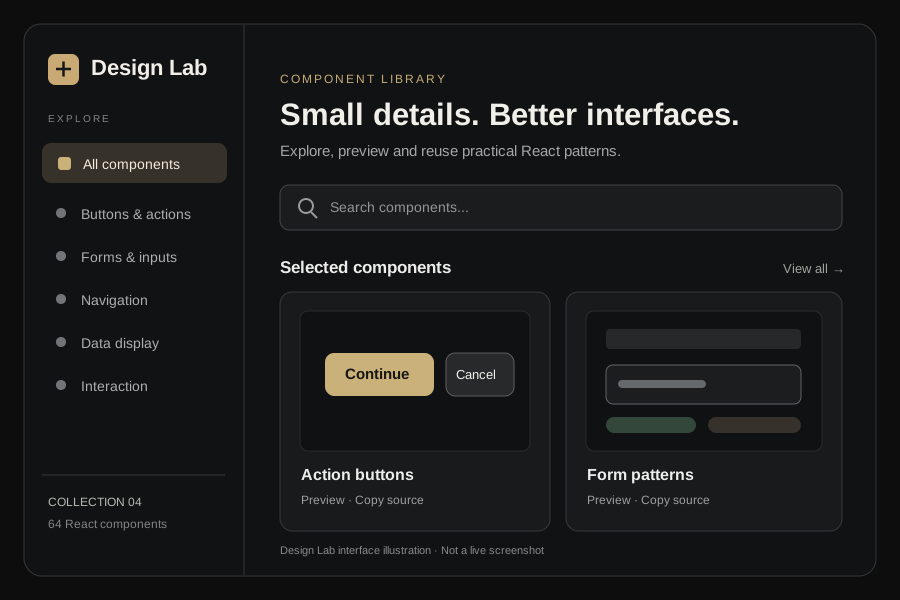
I designed and built a library of 64 original React components, with live previews, complete source, setup notes and a separate preview studio.
Evidence03
What the work demonstrates
The published library demonstrates reusable component work, interaction design and practical documentation. The examples can be explored without first setting up a development environment.
Published interface
The preview could not load. You can still read the story and visit the live project above.
An illustrated view of the Design Lab component library.
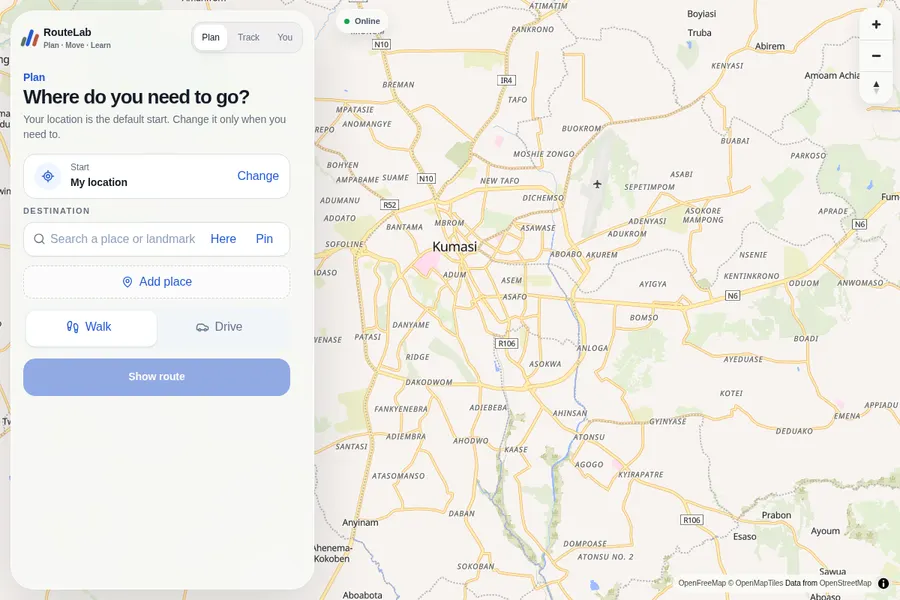
Route and place tools can become dense quickly. RouteLab started from wanting a calmer way to think about routes and places without turning a simple trip into a noisy dashboard.
Approach02
The approach
I kept the map as the main working surface and brought planning and movement history into the same flow. The quieter interface keeps the route itself at the centre of attention.
Evidence03
What the work demonstrates
Product framing, information hierarchy and restraint. It is also an example of choosing what not to surface at once.
Published interface
The preview could not load. You can still read the story and visit the live project above.
A business can communicate well visually while its customer journey and day-to-day work still feel disconnected. I wanted a place to think about those pieces together.
Approach02
The approach
I connect brand thinking with service, operations and lightweight technology, so the business can feel more coherent from the first impression through the day-to-day work.
Evidence03
What the work demonstrates
Brand identity thinking, customer experience, operational thinking and the ability to connect visual decisions to practical work.
Published interface
The preview could not load. You can still read the story and visit the live project above.
The current Hayalows homepage, including its three-step guided enquiry flow.
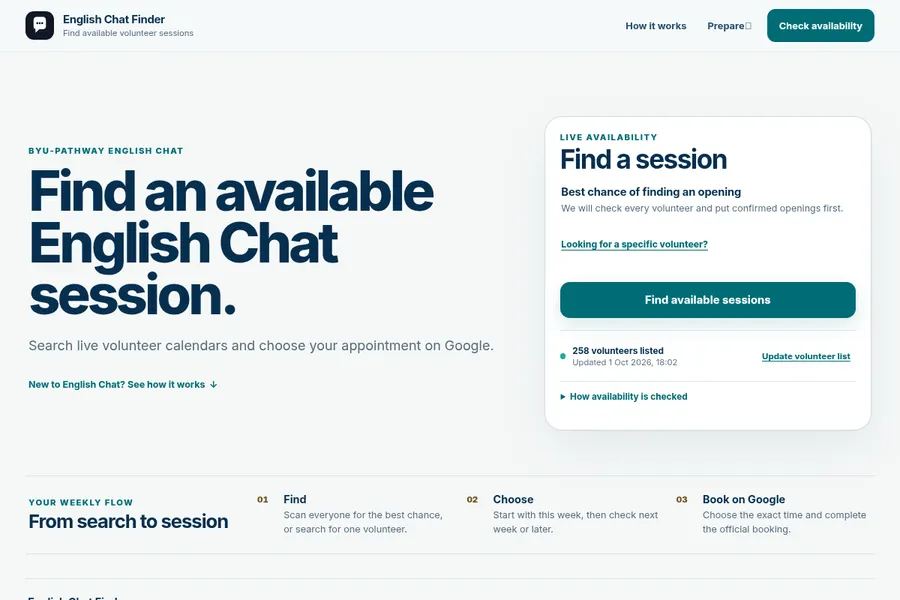
Finding a suitable conversation session meant checking many calendars repeatedly. The work was simple in theory but repetitive in practice.
Approach02
The approach
I put the user’s actual question, “what session can I join at this time?”, at the front of the experience. Availability from 200+ calendars comes into one search instead of asking people to check them one by one.
Evidence03
What the work demonstrates
Turning a repeated manual task into a focused utility, with search as the main interaction instead of the underlying calendar structure.
Published interface
The preview could not load. You can still read the story and visit the live project above.
A searchable index of portfolios surfaced through one design conversation and its replies, with practical notes for the people making and hiring for digital work.
One X thread can surface more work than a designer or hiring manager can compare carefully. The useful ideas are buried across dozens of separate sites.
My role
I reviewed the collected portfolios, shaped a six-part quality rubric, organised the archive and designed and built a searchable reading experience.
The approach
The archive now has 150 portfolios. The original 50 received a closer review, while the newer entries are identified as first-pass screenings. Detailed notes retain a designer lens and a hiring-team lens.